
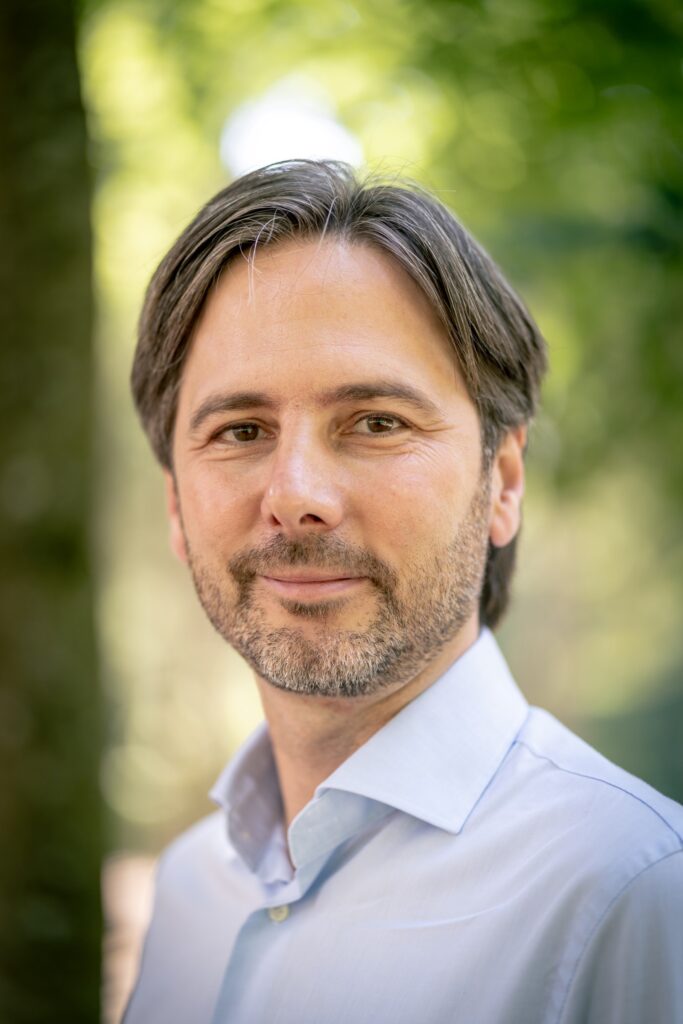
Prof. Dr. Marcus Gwechenberger studied geography, politics and sociology in Heidelberg, followed by urban planning at TU Darmstadt. After earning his doctorate in 2006, he worked at PROPROJEKT as a project manager for Germany’s National Urban Development Policy initiative and national UNESCO World Heritage Sites. He subsequently served as team leader for urban planning at Nassauische Heimstätte. Since 2016, he has worked in the Department of Planning and Housing of the City of Frankfurt am Main, initially as an adviser before being elected head of the Department for Planning and Housing in 2023. Alongside this role, he has taught urban development at Frankfurt University of Applied Sciences for more than a decade and has been professor of urban transformation since 2023. Since 2024, he has also been a member of the Assembly of the FrankfurtRheinMain Regional Authority.
Interview
How would you describe your vision for the ‘‘Spaces of Mobility’’ for the Munich Metropolitan Region in 2034 in three words?
Railway stations as vibrant urban meeting points. Stops acting as mobility hubs with a strong social function. Well-designed spaces of high architectural quality.
What do you see as the biggest mobility challenge facing the Munich Metropolitan Region?
The Munich Metropolitan Region continues to grow. The main challenge is to ensure that this growth is matched by forward-looking planning and the pace of implementation necessary to support it.
What motivated you to get involved in the IBA-M?
I am fascinated by the exchange of ideas with fellow professionals from other cities and countries, discussions about best-practice examples and the regional perspective – as well as the lessons we can draw from them for Frankfurt.
What unique perspective or expertise do you bring to the IBA-M?
I bring first-hand experience of working in a dynamic and rapidly growing region like FrankfurtRhein-Main.
For me, the IBA is…
…an inspiring platform for testing innovative approaches and exploring new paths in urban development.